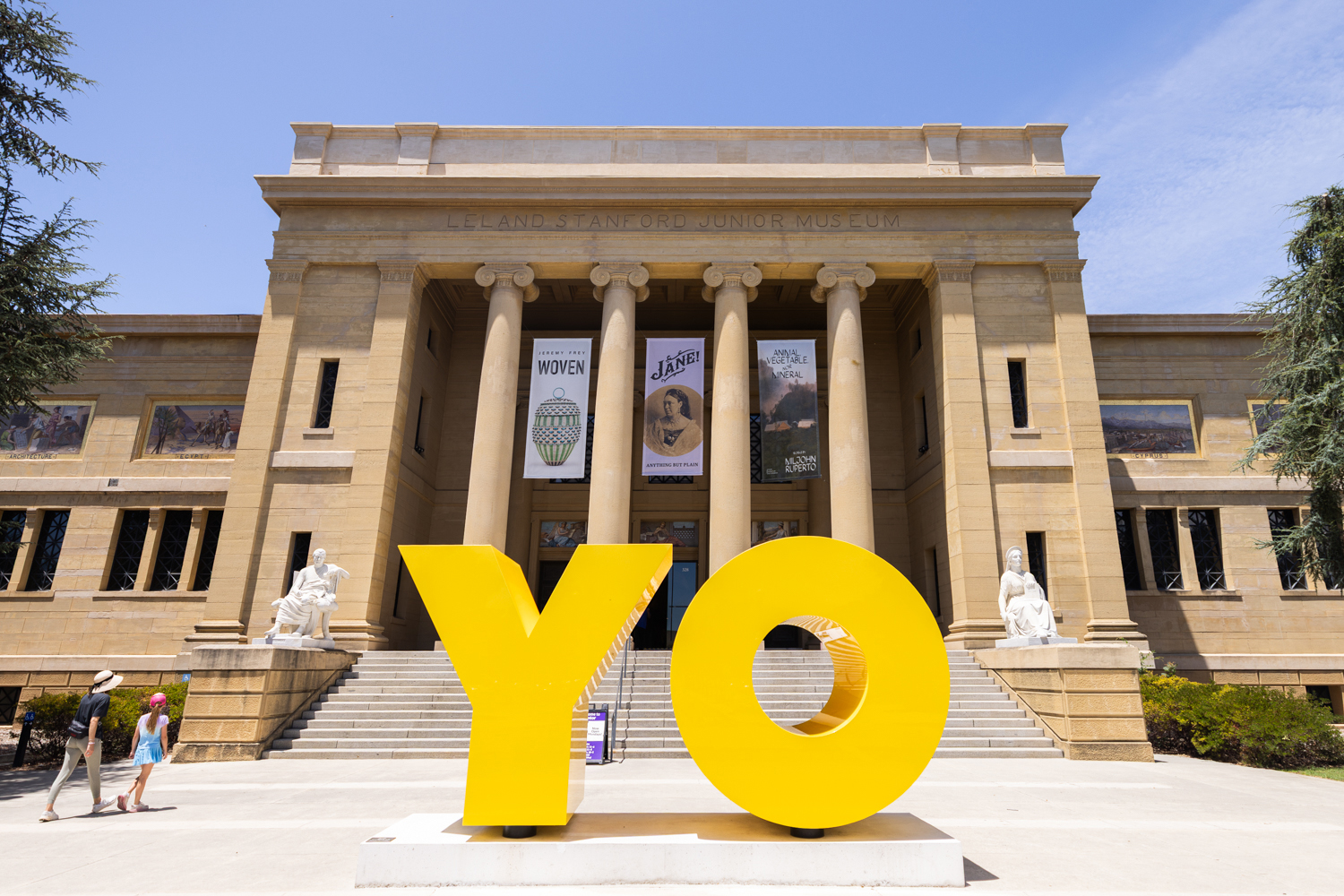
Two new exhibitions at the Cantor Arts Center invite visitors to reconsider what they think they know about the natural world – one through woven baskets that carry millennia of Indigenous knowledge, the other through dynamic multimedia works that shift and transform over time.
A futuristic take on nature
In Animal, Vegetable, nor Mineral, Manila-born and Los Angeles-based artist Miljohn Ruperto uses a mix of new and traditional media to ask how we frame and name the world around us – and what those acts of naming reveal.
“This show is very much focused on nature and thinking around these taxonomic questions of how we categorize and describe the natural world,” said Maggie Dethloff, assistant curator of photography and new media at the Cantor, and curator for the exhibition. “But his work spider webs out in productive ways into thinking about how we understand history, and also some newer work that’s thinking about how we influence the future.”
The show features 13 artworks spanning sculpture, photography, live-action and animated video, and immersive virtual reality experiences, which are a first for the Cantor. Some works contain multiple pieces.
Harrison Truong
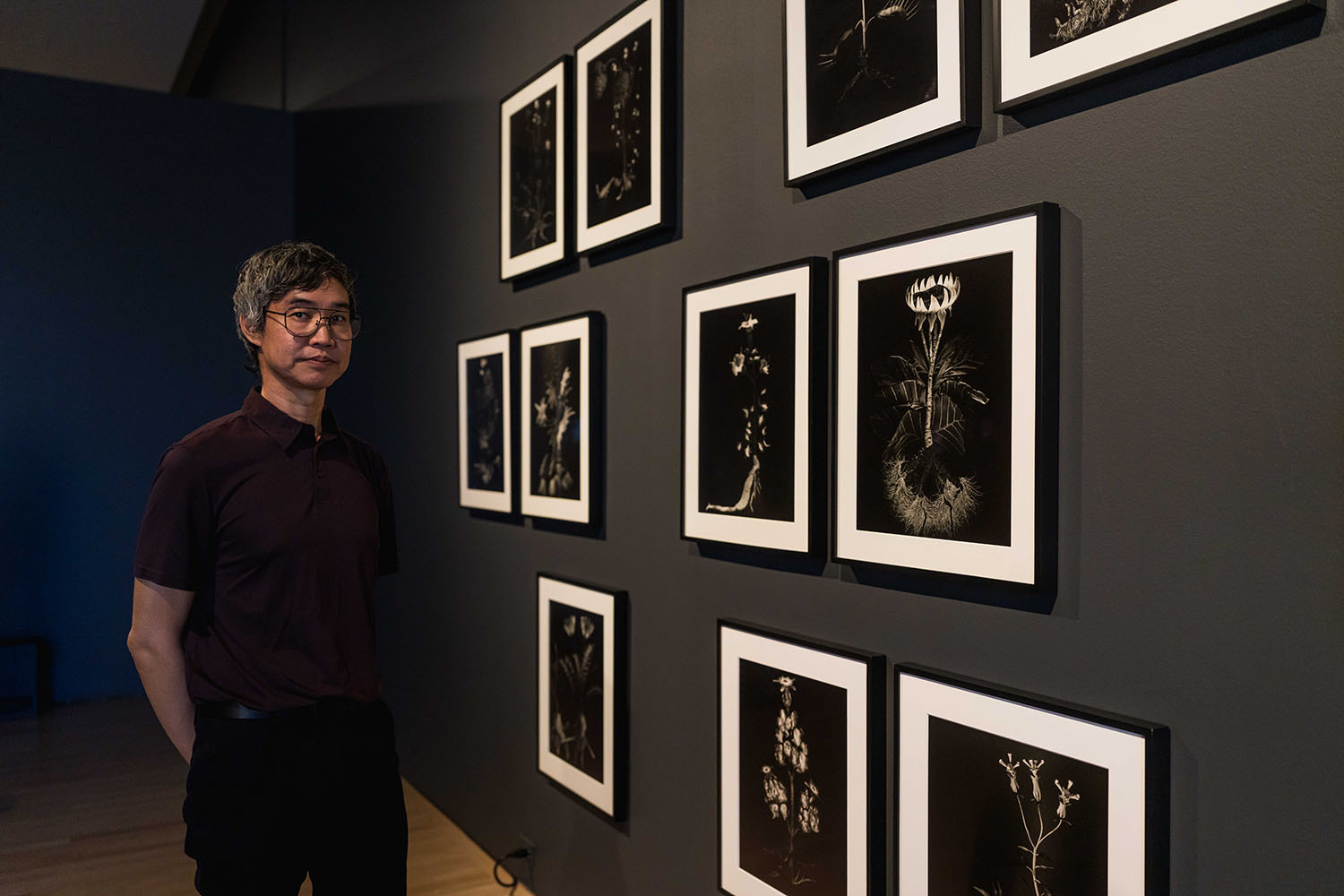
Artist Miljohn Ruperto stands next to the Voynich Botanical Studies, which he made with visual artist Ulrik Heltoft.
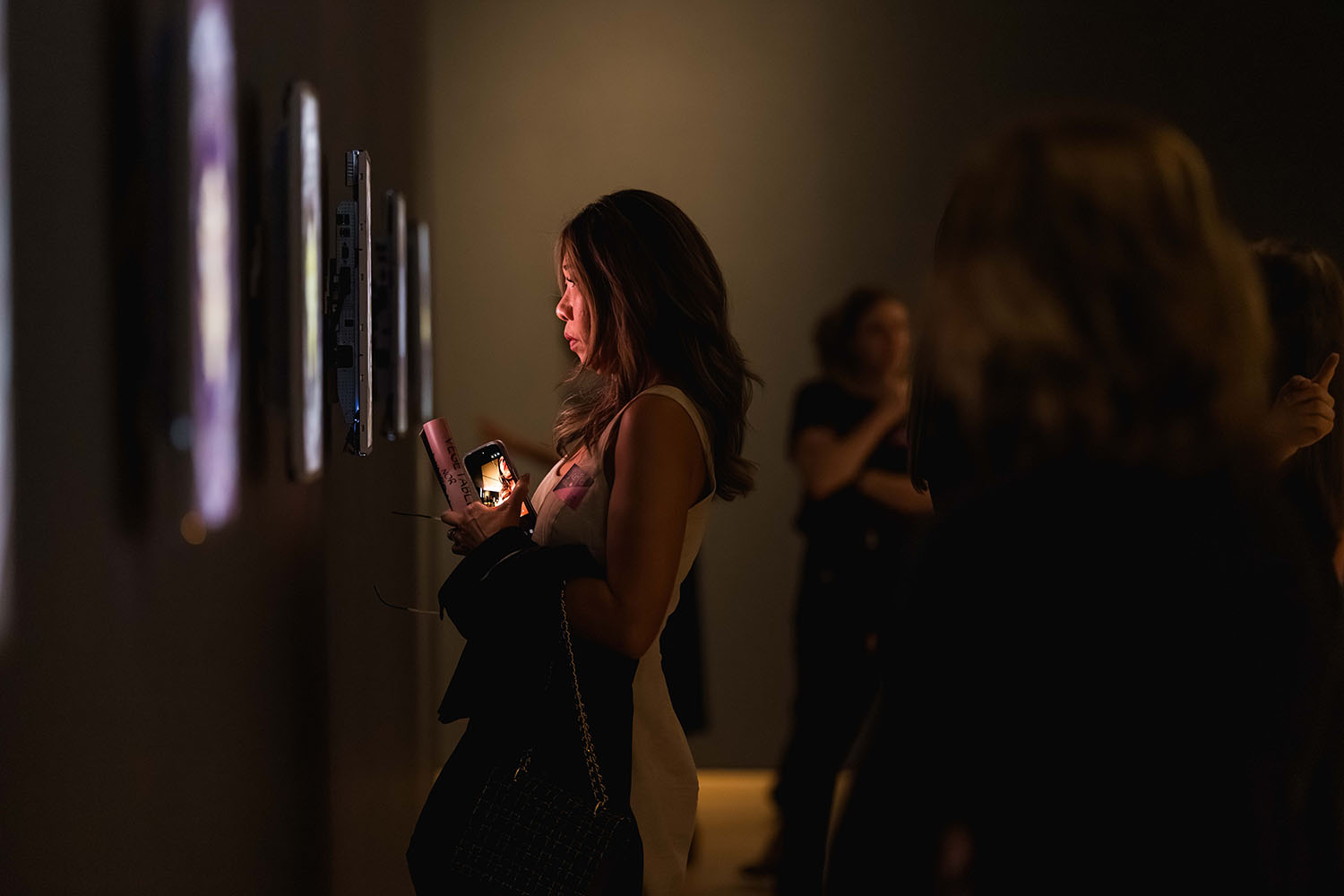
A viewer interacts with Ruperto’s multi-part Mineral Monsters, which he made in collaboration with Aimée de Jongh.
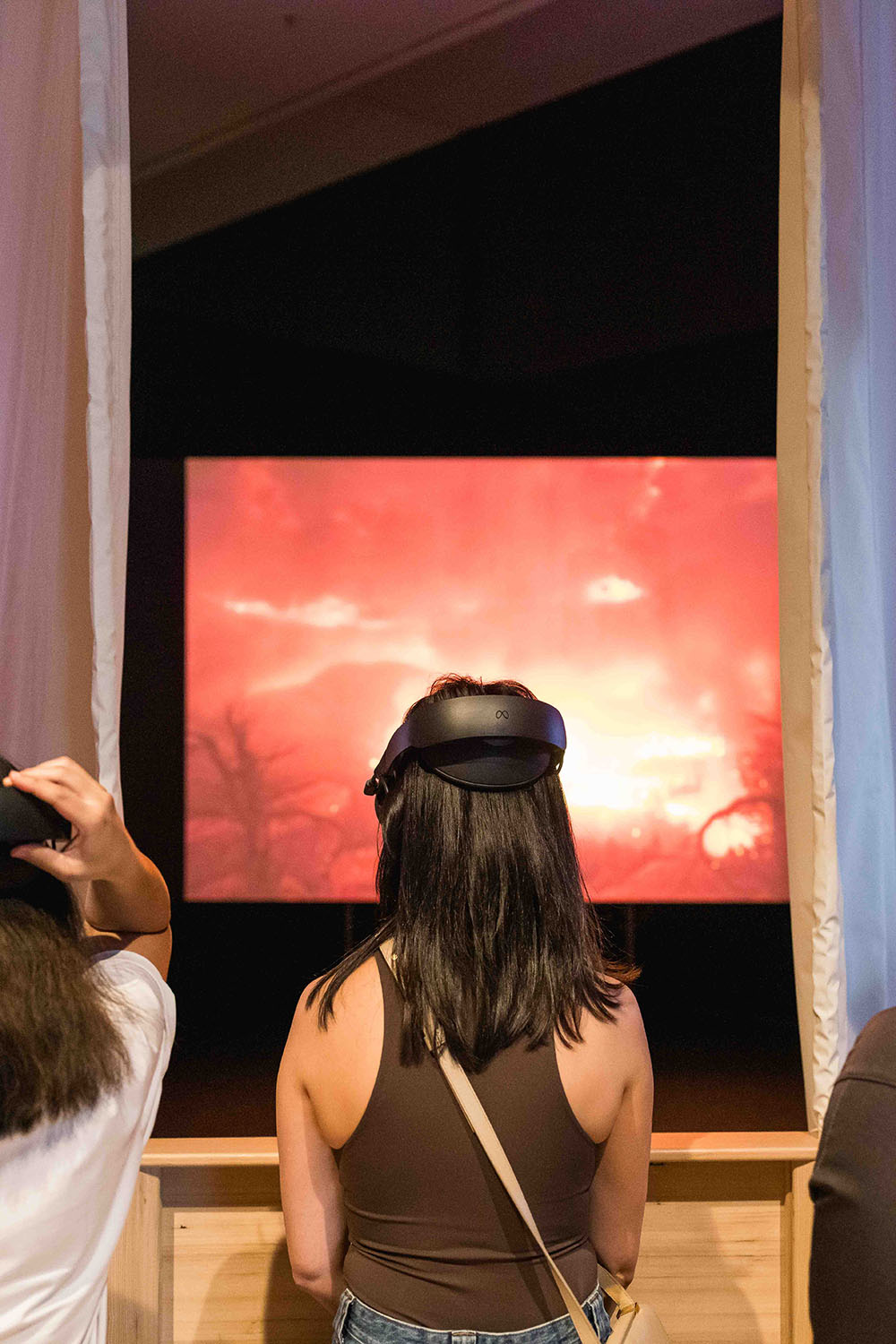
Visitors to Ruperto’s exhibition interact with What God Hath Wrought: (Kairos), a work that comprises three apocalyptic scenarios presented as both VR experiences and videos that resemble animated paintings.
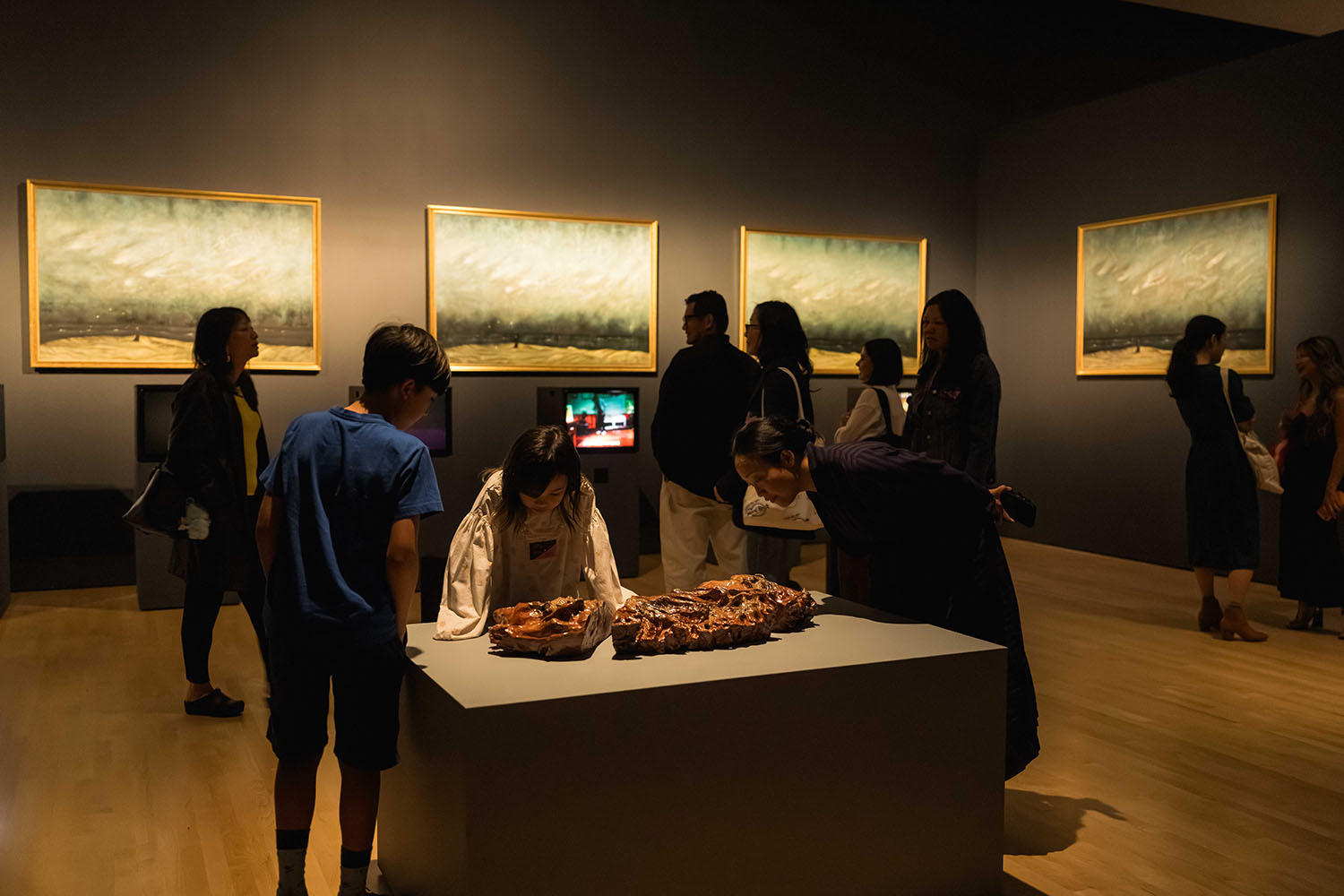
The show features 13 artworks spanning landscape painting, photography, and sculpture, among other mediums.
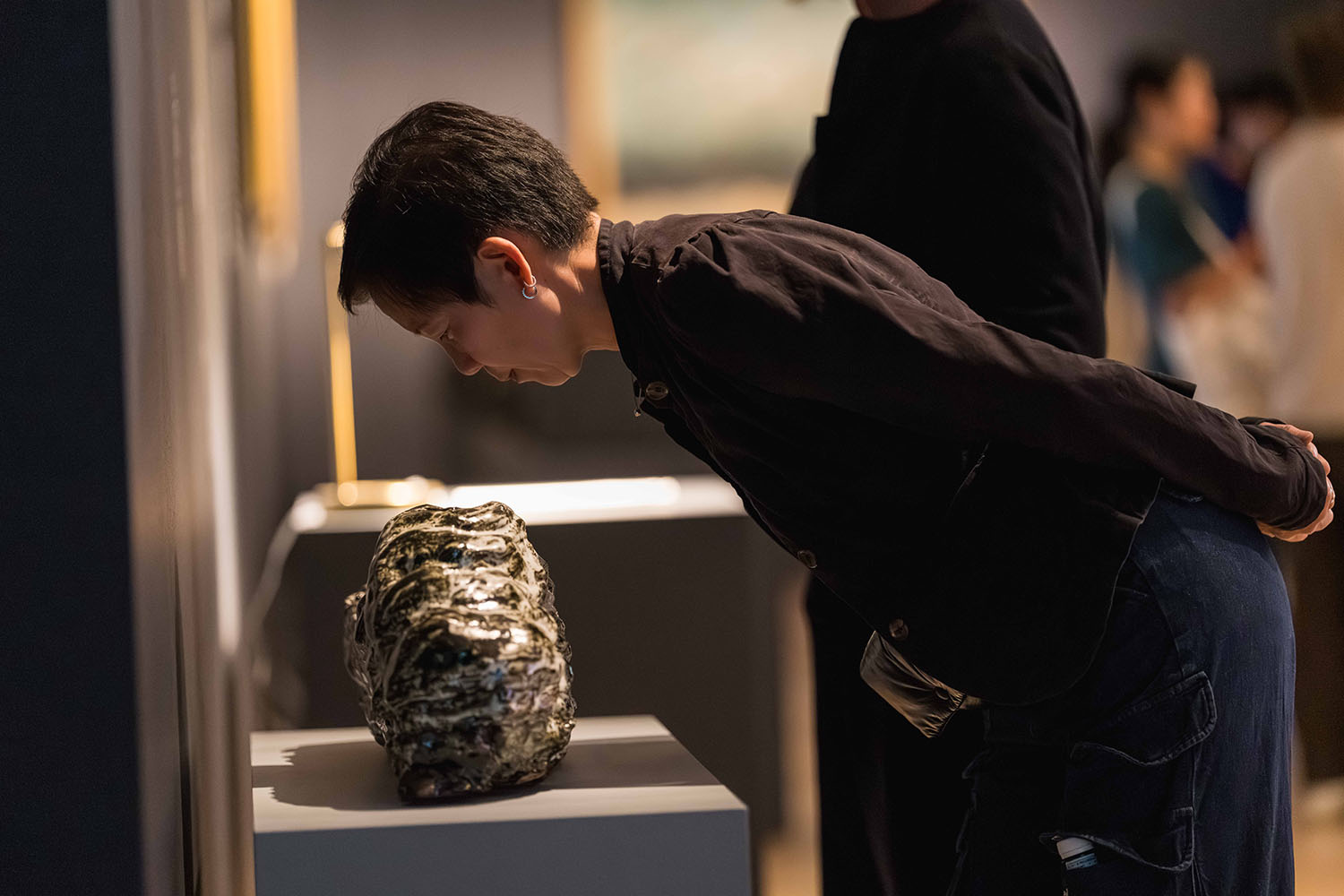
A viewer observes Rolling Head (durational collapse), a sculptural work Ruperto made with artist Candice Lin.
What God Hath Wrought: (Kairos), a work commissioned by the Cantor, comprises three apocalyptic scenarios presented as both VR experiences and videos resembling animated paintings.
“It’s an interesting work because the artist is ultimately critical of aspects of this technology,” said Dethloff. “In this work, Ruperto draws a connection between 19th-century expansionist attitudes toward the landscape and today’s expanding virtual worlds.”
Ruperto is also pushing back on the myth of the solitary artist. Several of the show’s pieces were created in collaboration with other artists, including the Voynich Botanical Studies, made with visual artist Ulrik Heltoft, and Mineral Monsters, made with animator Aimée de Jongh.
“People often think that the default is always the individual, but the real story is that people are entangled,” Ruperto said. “The ideas you get are from someone else, or from some other place. When I make a work, it’s in conversation with other artists or thinkers. I think it’s much more honest to foreground that entanglement.”
Animal, Vegetable, nor Mineral: Works by Miljohn Ruperto is on view in the Freidenrich Family Gallery at the Cantor Arts Center through Sep. 14.
A show thousands of years in the making
Jeremy Frey, a seventh-generation Passamaquoddy basket weaver of the Wabanaki Confederation in Maine, said that his mother, Frances “Gal” Frey, cried when she saw his debut show at the Portland Museum of Art in 2024. Two years later, she still cries when she sees his work on exhibit.
“She grew up in a family that wove, everybody wove to eat, and it was a time when you did a lot of work for a little pay,” said Frey, who received recognition as a 2025 MacArthur Fellow for his work in Jeremy Frey: Woven. “It wasn’t as respected, so for her to see it like this, in an art museum setting, she has a lot of pride in all of it.”
As the show’s only West Coast venue and final stop, the Cantor worked with Frey to present more than 30 works that build on Wabanaki basket-making tradition while pushing its boundaries. Each piece was made from harvested materials – ash, cedar bark, porcupine quills – hand-dyed in his workshop.
Glen Cheriton
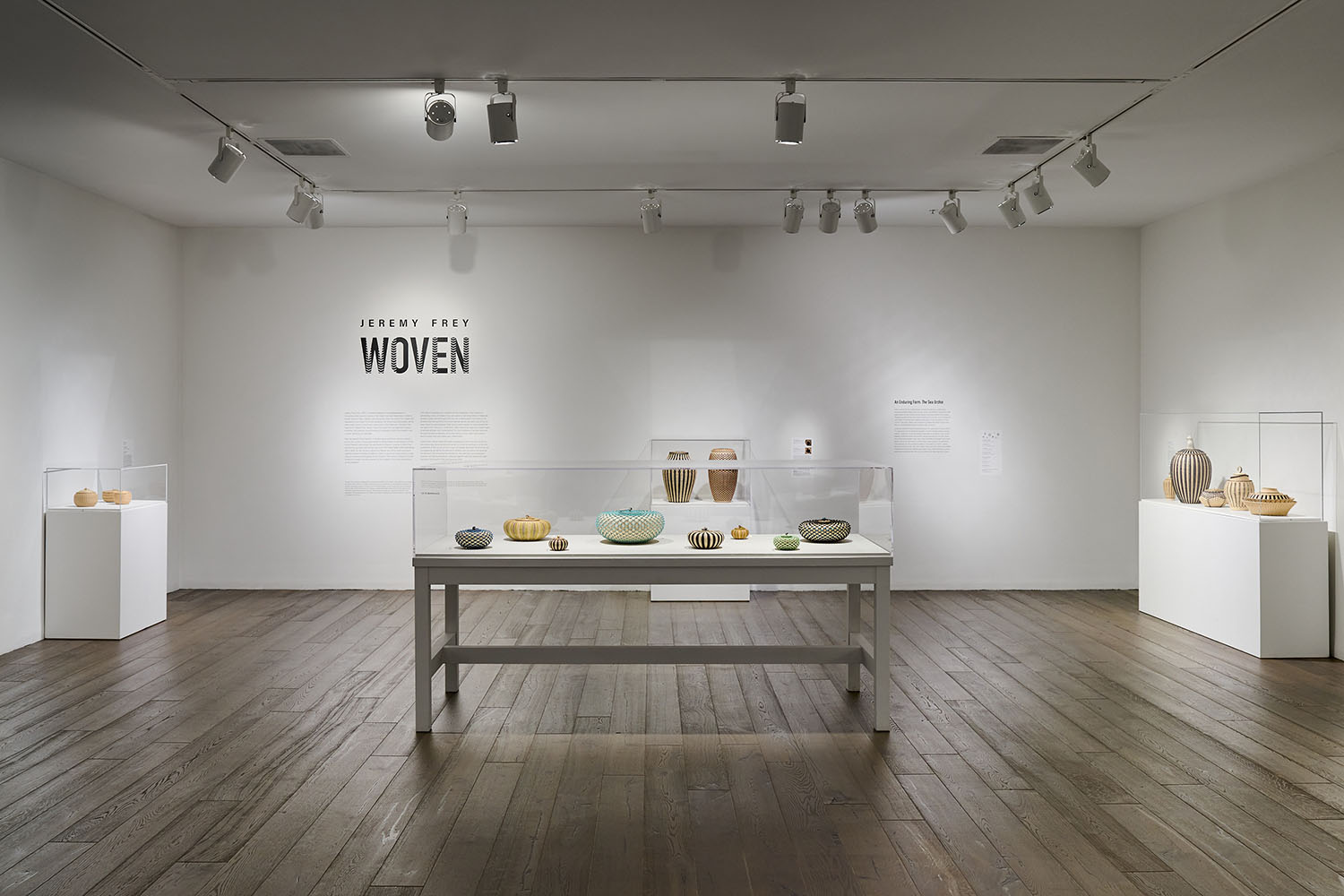
As the show's only West Coast venue and final stop, the Cantor worked with artist Jeremy Frey to present more than 30 works that honor Wabanaki traditions and bring them forward.
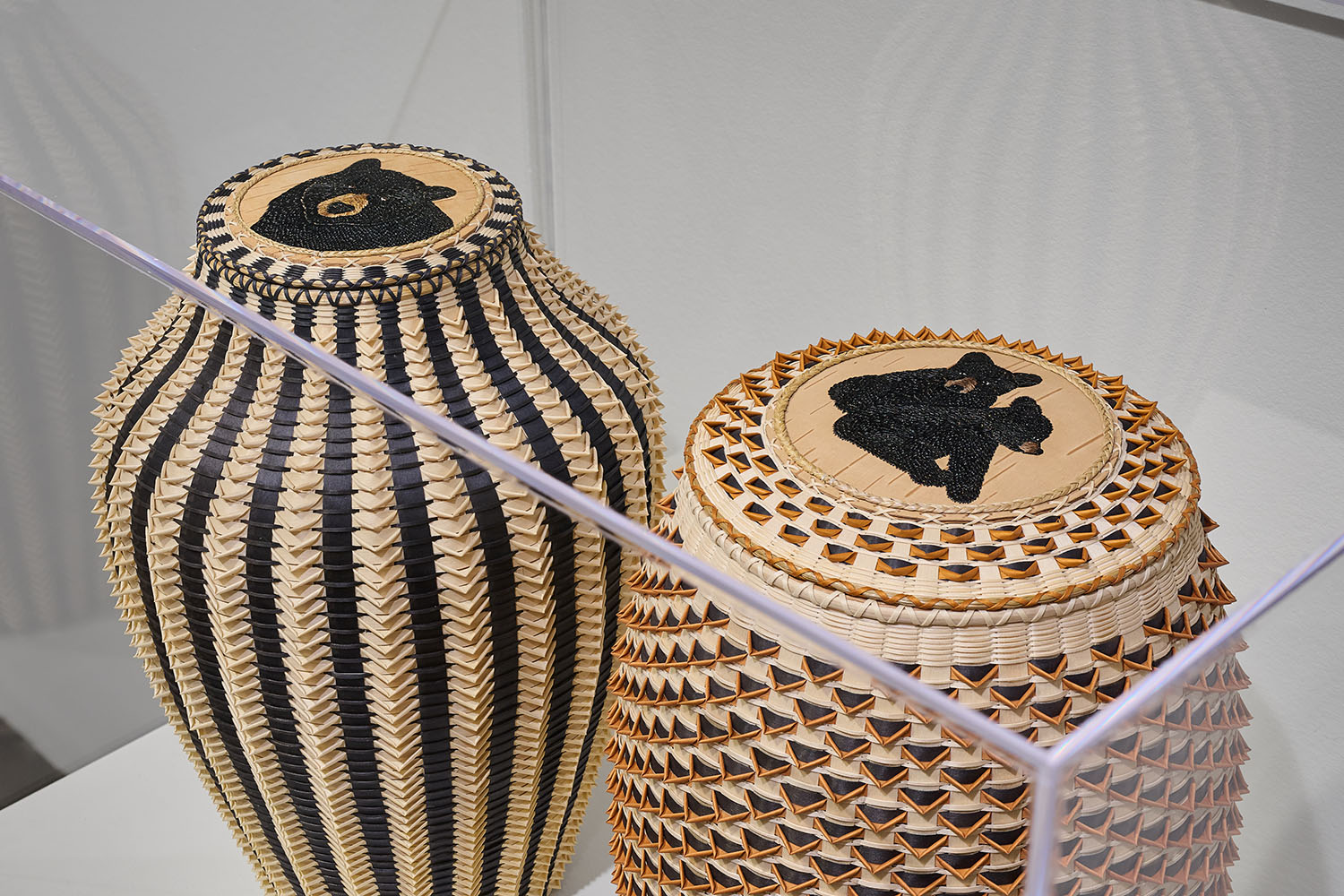
Many of Frey’s works feature animal designs made of porcupine quills.

Frey plays with color and texture in pieces like this one, which features a wolf’s head.
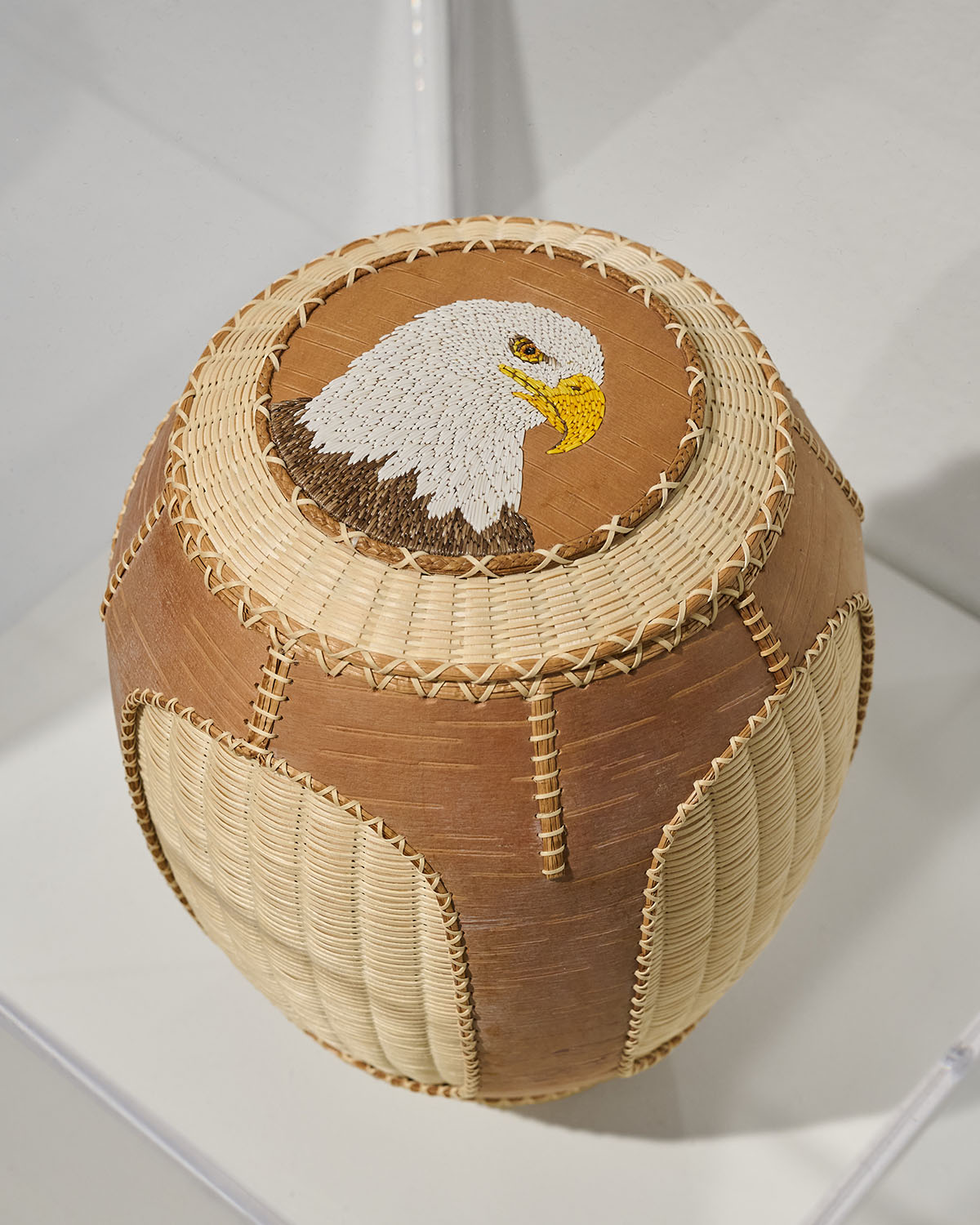
This piece, entitled The Basket Tree, is one of Frey’s favorites because of the technical challenges involved. “As a craft artist I love how impossible it was to make,” he said.
“There are moments as a curator when you see work by an artist that you weren’t familiar with, and you’re blown away,” said Veronica Roberts, director of the Cantor Arts Center and the show’s curator for its Cantor presentation.
“Years go into just getting to the point where he can make these works. The process doesn’t begin with weaving the first strand – he goes into the woods, looks for the trees, and chops them down,” she said. “I think people outside the Wabanaki Confederacy, whatever their background, can relate to this question of cultural inheritance – what you’ve received, how you extend it and contribute to it, and help it grow."
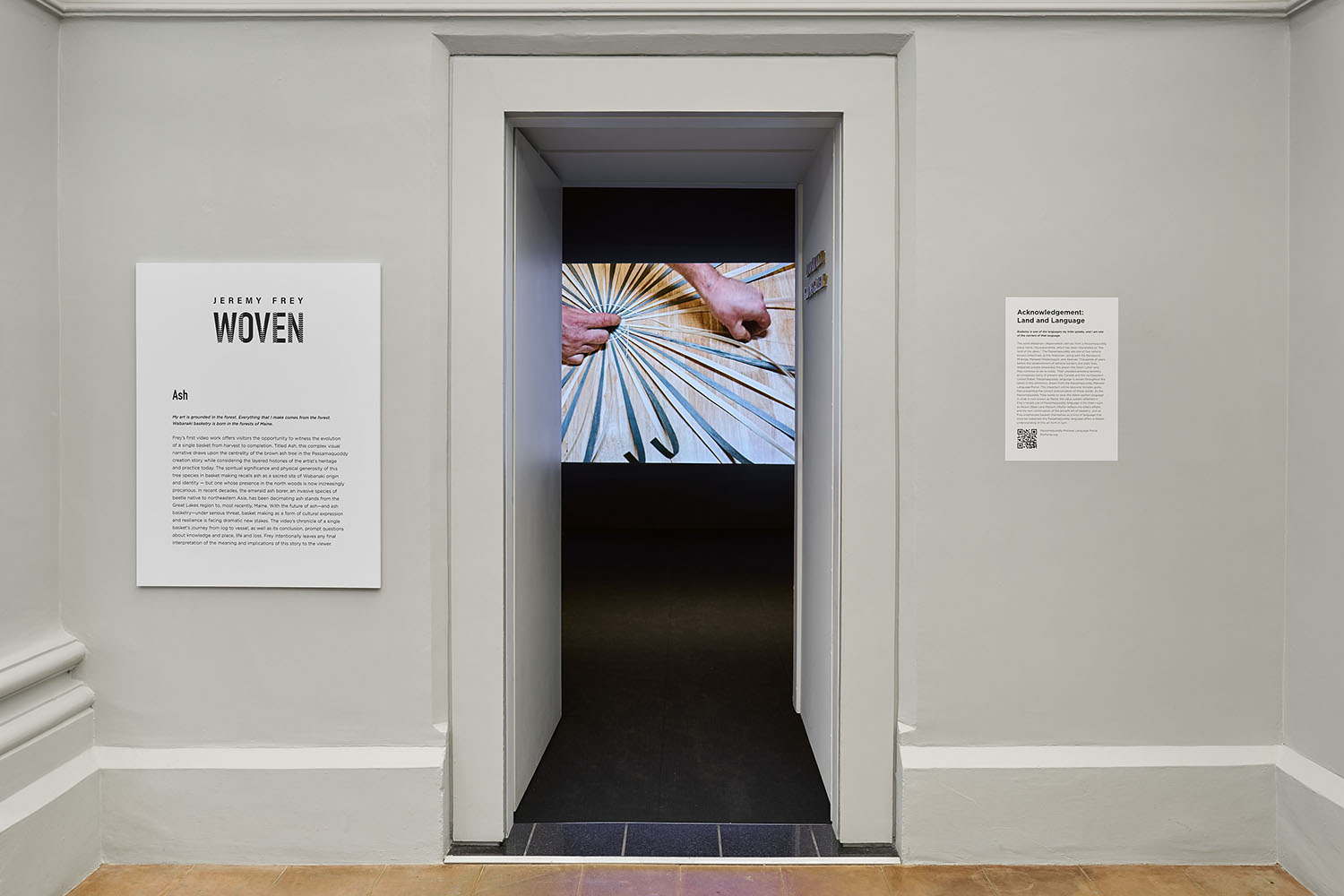
In addition to the baskets displayed in the Cantor’s Ruth Levison Halperin Gallery, some of which feature images of bears, wolves, eagles, and loons, the show includes a woven wall piece titled Caesura, two prints, and, in the gallery next door, a short film titled Ash that shows the lifecycle of one of Frey’s baskets.
“The concept of the video was the impetus for the show, in that it builds up appreciation for the art pieces by seeing how they’re made,” Frey said. “My goal has always been to have people see baskets as art by building on Wabanaki tradition and pushing the material forward.”
Jeremy Frey: Woven is on view in the Ruth Levison Halperin Gallery and the Lynn Krywick Gibbons Gallery at the Cantor Arts Center through July 20.
Writer
Olivia Peterkin